Please note: this long post is, at the moment, only in Spanish. I did not consider it a priority to translate it to English because it mainly refers to proposals in the context of the Spanish economic model and juncture. Nevertheless, I don’t discard posting the translation to it (and to its sequels) sometime in the future.
Nota incluida arriba para los lectores de habla inglesa: este extenso artículo está, de momento, solo en español. No consideré prioritario traducirlo al inglés porque consiste esencialmente en propuestas relativas al modelo y a la situación económicos españoles. Sin embargo, no descarto publicar su traducción (así como la de nuevos artículos que lo desarrollen) en el futuro.
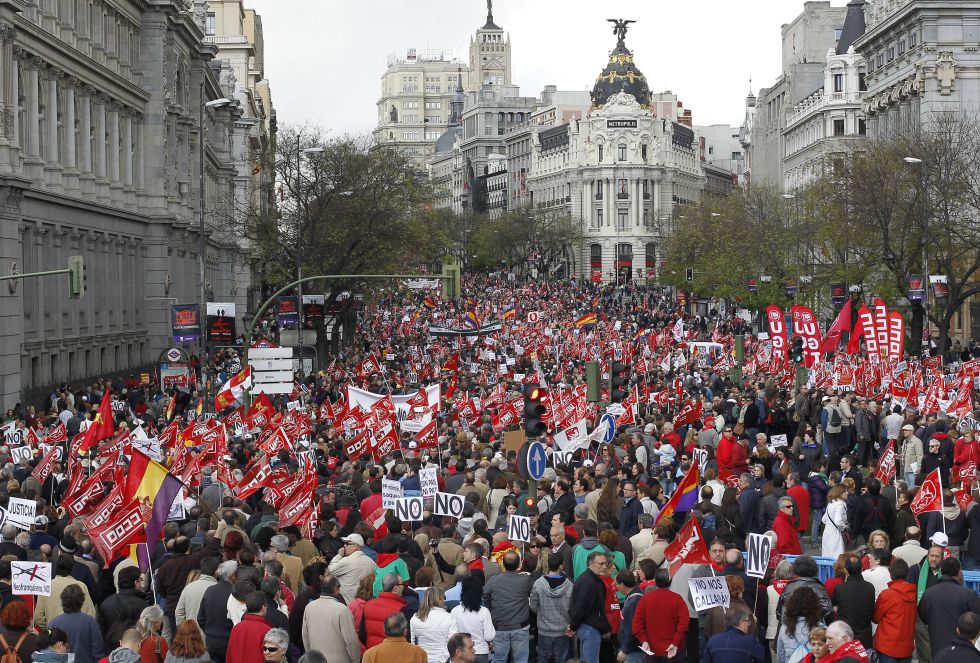
La obsesión por conformar a los mercados garantizando la sostenibilidad de las cuentas públicas y flexibilizando el mercado de trabajo nos sigue llevando por sendas inhóspitas y parcialmente erróneas, tendentes a destruir el estado del bienestar y las clases medias, como ya he indicado en un artículo anterior (sobre la globalización en el contexto de una reciente huelga general).
Y estos errores, como también he apuntado en aquella o alguna otra ocasión, se debe fundamentalmente a la miopía de los políticos y de los propios inversores y sus grupos de presión, que parecen no querer ver nada más allá del corto plazo: los beneficios de este ejercicio, los resultados de la próxima encuesta, la financiación del partido en la próxima campaña.
Se nos venden como inevitables medidas que incumplen principios básicos de la economía social de mercado que consagra nuestra Constitución. Se establecen normas transitorias, con fecha de caducidad, que no pretenden en serio reformar los fallos del modelo, sino solo disimularlos en el corto plazo. Y se debilita de nuevo la posición negociadora de los trabajadores frente a los empresarios, retrocediendo hacia el siglo XIX y creando un caldo de cultivo para nuevas revoluciones a lo bolchevique.
Ahora que la mayor parte de teóricos de la historia y la economía hace tiempo que dieron por muerto a Marx (que no supo prever el nacimiento de la socialdemocracia y del estado del bienestar), se potencia ciegamente una nueva situación de dialéctica histórica que puede terminar generando otra lucha de clases abierta. Y mantener a las masas, como se está intentando, en la incultura, no va a evitarlo, como no lo evitó en la Edad Media ni en el siglo XX.
Pero como introducción esta ya resulta larga. Lo que quería hacer hoy es proponer una serie de recetas alternativas a las que estamos viendo.
Y lo hago desde una óptica muy clara, desde unas premisas para mí fundamentales:
Primera: creo en la socialdemocracia, en el estado del bienestar y en la economía social de mercado como modelo más sostenible para la prosperidad y, lo que es más importante, para la felicidad del colectivo humano. Porque aunque muchos no quieran verlo, el fin último de la sociedad humana no es el crecimiento económico, sino el bien común y la búsqueda de la felicidad individual y colectiva (casi me sobra decir que un mayor crecimiento económico en el corto plazo no es condición necesaria ni suficiente para un mayor bienestar colectivo).
Segunda: en cuanto a las finanzas públicas, creo en el papel impulsor del sector público en su aplicación de las políticas de ingresos (impuestos) y gastos (inversiones). Entiendo que el papel redistribuidor de la renta de las administraciones públicas es irrenunciable, como consecuencia de la premisa primera.
Tercera: creo que el modelo paternalista heredado del franquismo y la transición tiene fallos, fundamentalmente consecuencia de su obsolescencia; pero en parte también de su clientelismo. Sí es necesario introducir reformas estructurales; pero no de corto plazo o corto alcance, sino orientadas a la sostenibilidad del modelo social y económico en el largo plazo.
Y dicho esto, me voy a limitar a enunciar mis propuestas, pero sin explicarlas. Cada una de ellas requeriría un artículo completo, y si mi tendencia a la procrastinación no me lo impide, esa es la idea, ir explicándolas una a una en próximas semanas o meses. Allá van pues:
Uno. Reforma laboral. Costes de los despidos.
Recuperemos la indemnización de 45 días por año trabajado para el despido improcedente, y los requerimientos que ya teníamos en 2010 para los despidos por causas objetivas. Pero al mismo tiempo, establezcamos una indemnización máxima, no en función del salario (no hasta dos anualidades, ni hasta tres, ni hasta una), sino fija: 30 000 euros de 2010, con actualización automática año a año según el IAPC.
Dos. Reforma laboral. Formas de contratación.
Eliminemos de una vez todos los contratos de duración determinada, a excepción del contrato de interinidad en sustitución de empleados ausentes. Y esto valdría tanto para el sector privado como para el público, aunque implique que las administraciones e instituciones tengan que empezar a realizar despidos que antes evitaban mediante contratos eventuales y por obras o servicios determinados.
Tres. Reforma laboral. Acceso al empleo.
A igual cantidad de trabajo en oferta, mayor vida laboral equivale a más parados. Luego devolvamos la edad de jubilación voluntaria a los 65 años. Y permitamos las prejubilaciones en la medida en que sean costeadas por las empresas (en su caso, con el apoyo que puedan acordar con sus planes de pensiones privados).
Cuatro. Salarios mínimos.
Fijemos el salario mínimo interprofesional, anual bruto para jornada completa (40 horas semanales), en 12 000 euros de 2010 con actualización automática año a año según el IAPC. Esta medida solo puede entenderse en conjunto con la siguiente, y por la misma razón iría acompañada de una única subida del 32% para todos los salarios inferiores a 30 000 euros brutos anuales.
Cinco. Sostenibilidad de las cuentas públicas. Seguridad social.
Eliminemos todas las bonificaciones, transitorias o permanentes, que existan ahora. Y traspasemos toda la cotización del empresario al trabajador. En otras palabras: todos los trabajadores pondrán de su sueldo y en su propio nombre la totalidad de la cotización a la seguridad social.
Seis. Sostenibilidad de las cuentas públicas. Seguridad social.
Hagamos del actual sistema proporcional un sistema progresivo. Esto es, eliminemos el concepto de base máxima de cotización, sin cambiar el actual modelo de prestaciones mínimas y máximas. Todos los trabajadores cotizarán en función de la totalidad de su sueldo. Dado el impacto tan potente que esta medida puede tener, en combinación con la anterior, sobre los salarios más altos, puede plantearse una implantación escalonada, por ejemplo estableciendo que la base máxima crezca cinco veces el IAPC cada año, durante unos diez o doce años, antes de eliminar el concepto por completo.
Siete. Sostenibilidad de las cuentas públicas. Ingresos.
Consagremos como permanente el actual IRPF (impuesto progresivo), con su última subida provisional. La lucha contra el fraude debe mantenerse como prioridad absoluta en este impuesto. Si la situación actual obliga a subir el IVA (impuesto indirecto y por tanto regresivo), que sea este el que se incremente de forma solo temporal.
Ocho. Sostenibilidad de las cuentas públicas. Ingresos.
Adoptemos ya la tasa Tobin, aunque seamos los primeros en hacerlo y esto provoque una deslocalización financiera temporal (hasta que los demás países la vayan adoptando también). Eliminemos el impuesto de sociedades: lo que la empresa reinvierta no tendría tributación directa, lo que la empresa distribuya tributaría por IRPF.
Nueve. Sostenibilidad de las cuentas públicas. Gastos.
Eliminemos progresivamente (en un plan a varios años) todas las subvenciones. Las organizaciones no gubernamentales de todo tipo deben ser sostenidas por sus miembros, aquellos que creen en su causa o se benefician de su acción, y esto incluye a los partidos políticos, los sindicatos, las patronales y las organizaciones religiosas (incluida la iglesia católica). Esto permitirá reorientar el gasto hacia inversiones de futuro (educación, I+D+i, infraestructuras…) y al mismo tiempo mejorar las condiciones impositivas de las organizaciones con función social (por ejemplo, mejorando las deducciones por aportaciones o donativos a organizaciones sin ánimo de lucro).
Diez. Modelo social y austeridad. Sanidad y educación públicas.
Aunque Rodríguez Braun no esté de acuerdo, los derechos a la vida, a la salud y a la educación son más importantes que el derecho a la propiedad (y a acumular riqueza que no se reinvierte). Debe establecerse un calendario de marcha atrás en los recortes establecidos en sanidad y educación, de medio plazo, acompasado con la recuperación de las finanzas públicas.
Y aún me quedarían dos propuestas: las más políticas, de mayor alcance global y las más complicadas de diseñar e implantar:
Once. Modelo social, globalización y lucha contra el fraude. Papeles para todos.
De una parte, es inmoral negar derechos fundamentales a determinadas personas en función de su lugar de nacimiento: el extranjero no es menos humano que el español. Y de otra, los ilegales sostienen la economía sumergida, donde no hay contratos, despidos ni salarios mínimos (perjudicando al resto de trabajadores). Economía sumergida donde tampoco hay cotización a la seguridad social ni declaración de IRPF. Por eso, sería preferible regularizar a todas las personas que de hecho residan en nuestro territorio. Para que estén en el sistema, para que cuadren las cuentas y estemos todos en igualdad de condiciones ante el empleo y los derechos y deberes públicos. La dificultad es cómo hacerlo sin disparar el llamado “efecto llamada” y sin generar el rechazo absoluto del resto de miembros de la UE y de la Schengenland.
Doce. Modelo social y nacional. Estado y autonomías.
La soberanía es del pueblo. En esta convicción también choco con Rodríguez Braun, que entiende el Estado como un ser coercitivo que se impone a la ciudadanía. Y sí, se impone al individuo; pero no al colectivo. Porque cuando el aparato público gestor se opone a la voluntad del pueblo, suceden las revoluciones políticas. Y para evitarlo, convendría establecer un calendario de referendos periódicos que permitan ir ajustando el modelo estatal y autonómico (constitucional y estatutario) a la propia evolución social. Nada debería quedar fuera de las consultas, ni siquiera la monarquía, ni siquiera el derecho de autodeterminación o, por contra, de devolución de competencias. Para esto, casi más que para ninguna otra cosa, es fundamental un buen sistema educativo, uno que no intente generar una base social ignorante.
Solo como apunte final, soy plenamente consciente de que alguna de estas medidas pueden tener un efecto perverso sobre la inversión y el consumo en el corto plazo, al reducir la renta disponible percibida. Percibida, más que real, ya que la real se ve igualmente disminuida en la situación actual (o más, sobre todo en los colectivos más desfavorecidos).
Además, son medidas cuyo efecto positivo sobre el modelo económico y social no se vería en el corto plazo. No obstante, las medidas de urgencia que se están imponiendo tampoco están teniendo ese deseado efecto a corto, como se ve en las reacciones de los mercados, de la prima de riesgo y de las previsiones macroeconómicas más creibles en cuanto al empleo y las tasas de crecimiento económico. Por el momento, estamos poniendo parches para hoy que no están funcionando hoy, y que probablemente no servirán mañana.